ServicesWhole Home Water Filtration
Whole Home Water Filtration in Rancho Palos Verdes
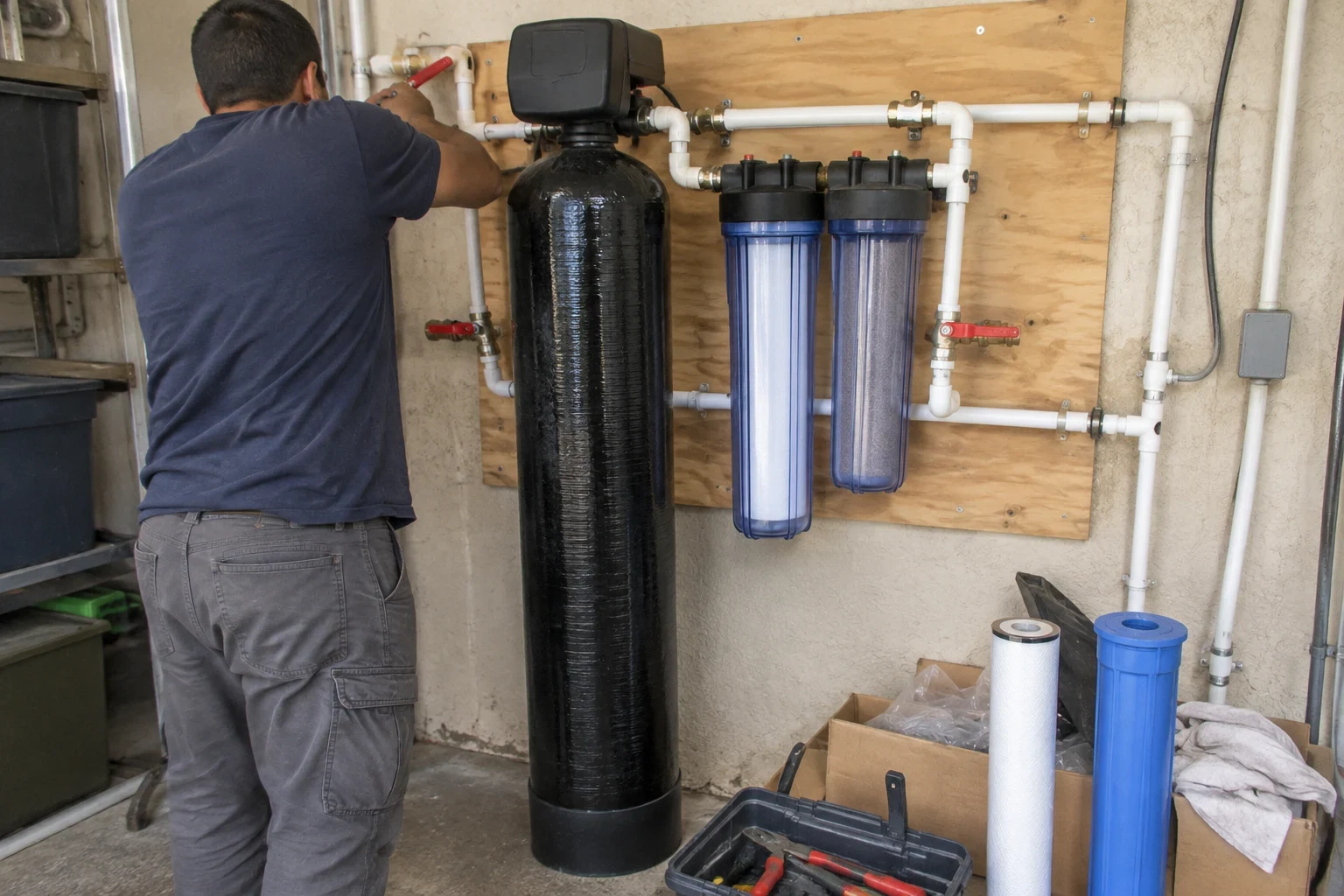
Our whole home systems mount on the main line after it comes into your home, so the shower, kitchen tap and washing machine all draw from water that has had its disinfectant taste and grit removed. We size the tank to your flow, walk you through each part and hand you dated photos and notes.
How a main-line filter treats every tap
The system is plumbed into the cold main just past the shutoff and pressure regulator, ahead of the branch that feeds the water heater and fixtures. First a sediment prefilter stops grit and flakes of pipe scale. Next, a tank of carbon media adsorbs the chlorine or chloramine your water utility adds as a disinfectant. That chemical is the taste in your glass and the smell that rises off the shower.
A whole home system makes sense when the problem shows up all over the house, such as an odor in the tub, skin that feels tight after a shower or debris collecting in showerheads. When the kitchen glass is the only thing bothering you, a reverse osmosis unit under the sink usually costs less and filters that water more thoroughly, and we will tell you that on the phone. Plenty of homes run both.
Before and after the work, we photograph your main line, the shutoff and the new connections, and write down the pipe material and its condition. Should a leak ever turn into a homeowners insurance claim, you will have a dated record of the equipment and how it was installed. We can explain what adjusters typically want to see, but we are not the adjuster and cannot predict your coverage.
What goes into the install
- 01
Sediment prefilter
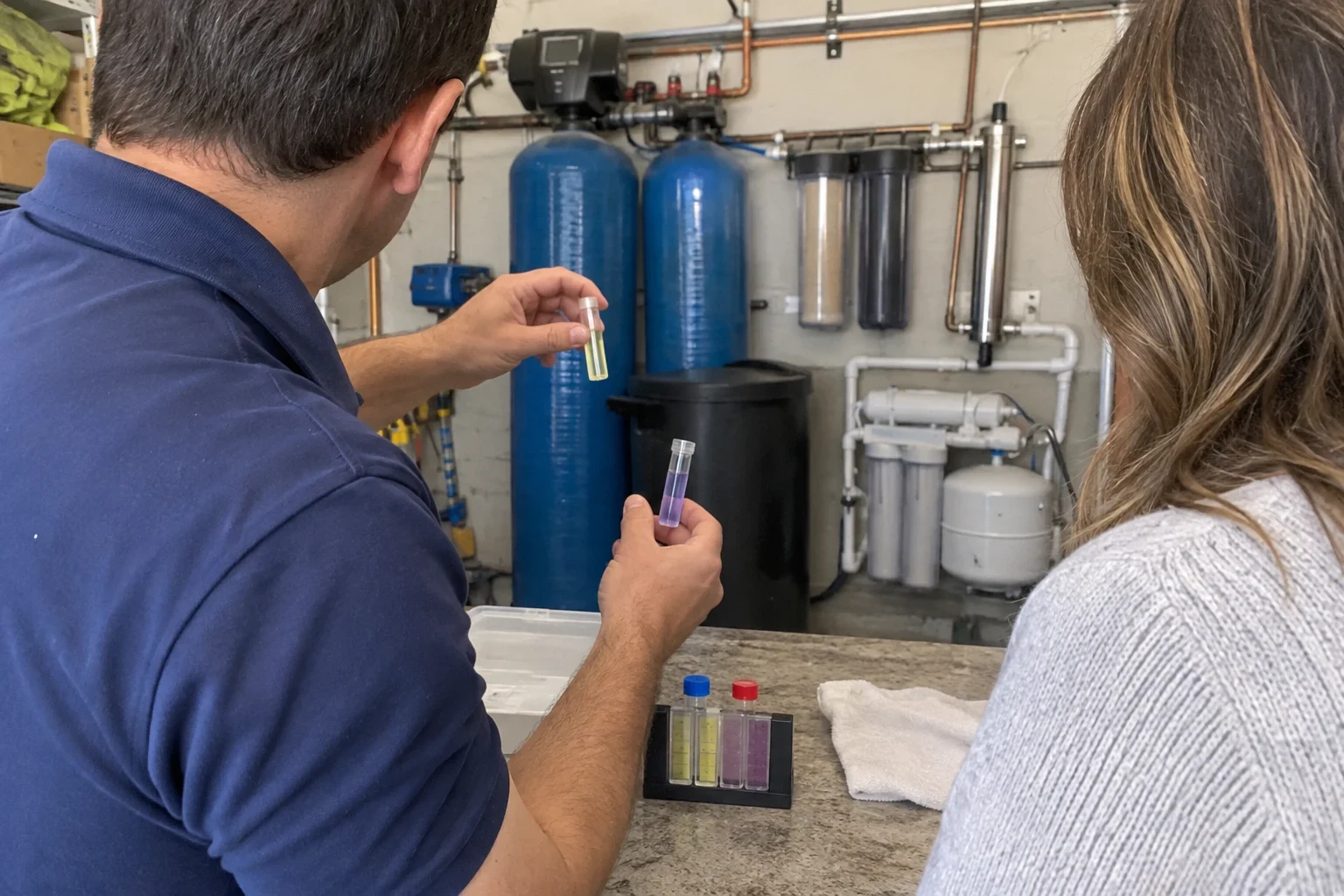
A cartridge housing mounted ahead of the main tank traps sand, rust flakes and loose scale. It protects the carbon bed from clogging, and it is the part you will replace most often.
- 02
Carbon media tank
The main vessel is filled with activated or catalytic carbon. Standard carbon is slow against chloramine, so catalytic is the stronger pick when that is in your water. We size the tank so water stays in contact with the media long enough at your highest flow.
- 03
Three-valve bypass
Three valves around the system let you send water past the tanks during a cartridge change, so the rest of the house keeps running.
- 04
Fittings matched to your pipe
We tie into copper, PEX or older galvanized pipe with the correct fittings. Where two different metals meet, we add dielectric unions to slow galvanic corrosion.
- 05
Startup flush and pressure check
Fresh carbon releases fine black dust, so we run the tank to drain until the water comes out clear. We then take pressure readings upstream and downstream of the system.
- 06
Photos and written notes
You get dated photos of the connection and a short written record of the parts, your pipe material and any wear we saw on the existing plumbing.
Questions about Whole Home Water Filtration?
Call(310) 340-6137When a main-line filter makes sense for your home
Chlorine smell in the bathroom
Hot shower water releases disinfectant into the air, which is why the odor is worst there. A filter on the kitchen sink cannot reach it.
Debris in aerators and showerheads
Specks in faucet screens usually mean sediment coming from the main or flaking off older pipe. A prefilter stops it before it wears down valve cartridges and appliance inlets.
Skin and hair that feel dry
Plenty of people say their skin and hair feel different once disinfectant is out of the shower water. It ranks among the most frequent reasons homeowners reach out to us.
A drawer full of replacement cartridges
Pitchers, the fridge and the showerhead each run on separate filters and separate schedules. A single system on the main can take over most of that work.
Older pipes you want documented
Homes with original galvanized or aging copper lines benefit from having the main photographed and its condition recorded while we are already working on it.
How install day runs
- 1
A phone conversation first
We ask about your home's size, number of bathrooms, where the main shutoff is and what bothers you about the water. That gives us the flow rate to size for, and tells us whether a whole home system fits or reverse osmosis suits you better.
- 2
Protect and photograph
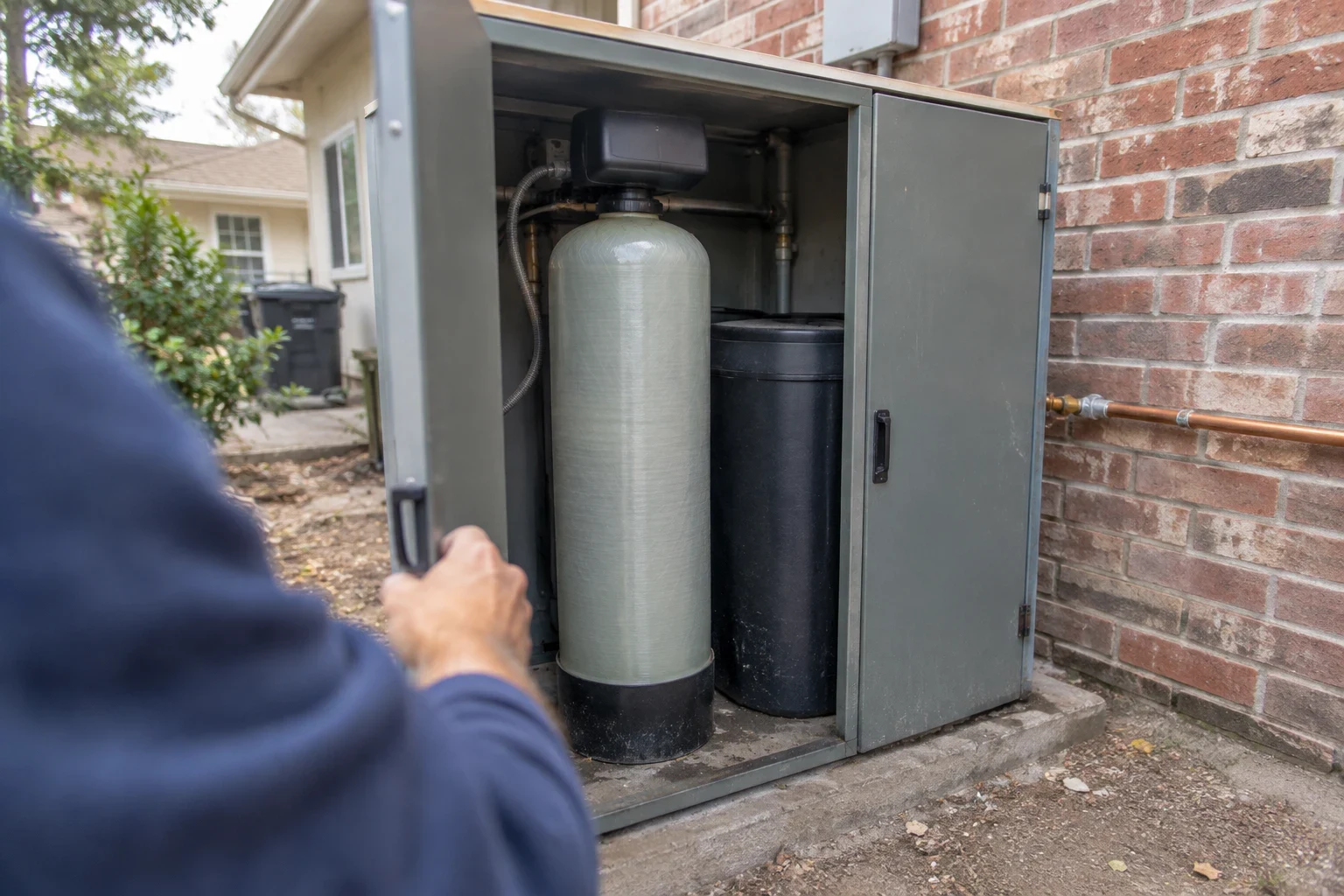
Many homes in the area have the main and pressure regulator outside near a hose bib or the garage. We lay down protection, photograph the existing pipe and let you know before the water goes off.
- 3
Cut in the system
We install the bypass, prefilter and carbon tank on the cold main ahead of the water heater branch, with the tank on a level, stable base.
- 4
Flush, test and clean up
We flush the media, check every joint for leaks, compare pressure across the system and take away packaging and cut pipe.
- 5
Walkthrough
We show you the bypass, how to swap the prefilter cartridge and what signs mean the carbon needs attention. Your photos and notes stay with you.
What sets the price of your system
We offer free install (we cover the cost). That leaves the equipment itself and whatever your plumbing needs before it can accept a new tank. We walk through each line item on the phone and confirm it again before any pipe is cut, and nothing is added unless you approve it.
- Peak flow and tank size
- When two showers, the dishwasher and a washing machine all run together, demand on the main climbs quickly. Larger homes need a bigger tank so water still spends enough time in the media and pressure holds steady at the fixtures.
- Standard or catalytic carbon
- Catalytic carbon is the pricier media, but it breaks down chloramine much faster than standard carbon. We explain which one your water supply calls for and why.
- State of the existing main
- A rusted galvanized section or a shutoff valve that will not close fully near the tie-in point may need replacing first. We show you the problem before we price it.
- Where the main runs
- A main beside the garage is a short job. One inside a cramped crawlspace or behind drywall needs extra fittings and longer pipe runs.
Questions about whole home filtration
Will a whole home filter lower my water pressure?
When the tank fits your home's flow, the pressure loss is slight and most households never feel it. A real drop at the faucet most often comes from an undersized vessel, or from a sediment cartridge that has filled with grit and is choking the flow. We size for your busiest moment of water use and show you how to tell when the cartridge is due.
Does it remove hardness or scale?
No. Carbon media handles disinfectant taste and smell, and the prefilter traps particles. Dissolved calcium and magnesium pass through both, and we will be straight with you about that.
How much upkeep does it need?
Swapping the sediment cartridge is the routine job, and the interval depends on how much grit your supply carries. The carbon bed goes far longer, with its life set by your household's water use and the type of media. We cover the warning signs during the walkthrough.
Is the drinking water as good as reverse osmosis?
It will taste noticeably cleaner than unfiltered tap water. Carbon does not strip dissolved solids, though, which is what a reverse osmosis membrane does. Many homes add an under-sink reverse osmosis unit at the kitchen for drinking and cooking.
Can you help if I have a water damage claim?
We keep dated photos and written notes on the plumbing we touch, and we can explain the details adjusters tend to ask about, like which fitting failed and when it was installed. We do not adjust claims or predict what your policy pays. That decision belongs to your insurer.
Do you install outside Rancho Palos Verdes?
Yes. We work in nearby towns such as Palos Verdes Estates, Rolling Hills Estates, Lomita and Torrance. If your town is not on our Service Areas page, ask when you call.
Find out what size system your home needs
Tell us how many bathrooms you have and where your main shutoff sits, and we will explain the system that fits and what it costs. Free install (we cover the cost).