ServicesCity Water Filtration
City Water Filtration in Rancho Palos Verdes
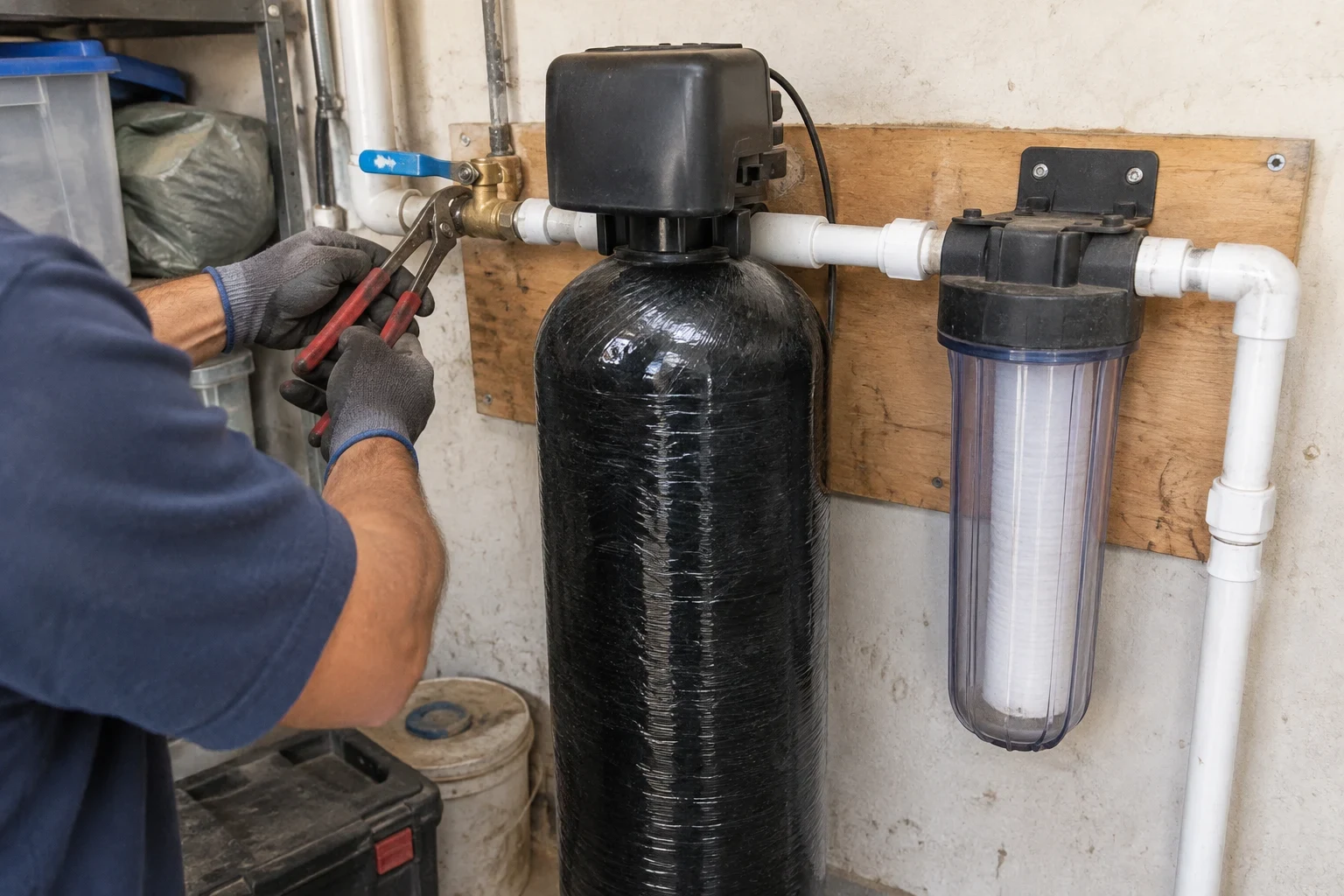
Municipal water is treated to be safe, and that treatment is part of what you taste. We install filtration designed for disinfected city supply: a sediment stage, then catalytic carbon sized to your flow, so the chemical taste and smell drop out before the water reaches your faucets.
What city water filtration does, and when it fits
Utilities in Southern California commonly disinfect with chloramine, a bond of chlorine and ammonia that stays active longer in the pipes than plain chlorine. That staying power is good for public health and hard on ordinary carbon. A standard granular carbon filter removes free chlorine quickly but treats chloramine slowly, so a cheap cartridge can let the taste come through within weeks.
A city water system uses catalytic carbon, a carbon processed to break the chloramine bond faster, behind a sediment prefilter that catches grit, pipe scale and rust flakes from older mains. It is the right call when your water is safe but smells like a pool, leaves coffee and tea flat, or dries out skin and hair in the shower. If you only want cleaner drinking water at one sink, our Reverse Osmosis page covers that. If you want treatment across every fixture with a larger tank system, see Dual Tank Water Filtration or Whole Home Water Filtration.
What the work includes
- 01
Sizing to your actual flow
We count bathrooms and fixtures and look at the size of your main line. Carbon needs contact time to work on chloramine, so an undersized vessel lets water pass through too fast and the taste comes back.
- 02
Sediment prefilter
A pleated or spun sediment cartridge goes ahead of the carbon. It keeps sand and scale from coating the carbon bed, which is what usually shortens media life.
- 03
Catalytic carbon stage
This is the working part of the system. It is chosen specifically for chloramine, not a general-purpose carbon.
- 04
Bypass valve and shutoffs
Every install gets a bypass loop and isolation valves. You can change a cartridge or service the unit without shutting off water to the whole house.
- 05
Free install
We cover the cost of installation. Your quote covers the equipment you choose, with each part listed so you can see what you are paying for.
Questions about City Water Filtration?
Call(310) 340-6137Signs your city water needs filtering
A pool smell at the tap
A chemical odor that is strongest first thing in the morning points to disinfectant residual. It is not a safety failure, but it is the main thing this system targets.
Drinks that taste off
Coffee, tea and ice pick up chloramine flavor. Many people stop drinking tap water entirely and start buying bottles because of it.
Dry skin after showers
Hot water releases more disinfectant into the air and onto skin. Filtering at the point of entry treats shower water too, which an under-sink unit cannot do.
Grit in aerators
Sand or dark flakes in faucet screens mean sediment is moving through your lines. That debris also wears valve cartridges and appliance inlets.
Pitcher filters that stop working fast
If a countertop pitcher tastes fine for a week and then fades, its small carbon block is saturating. That is a sign you need more carbon and more contact time.
How install day runs
- 1
Phone conversation first
When you call, we ask how many bathrooms you have, where the main shutoff is and what you dislike about the water. From that we put together a quote by phone before anyone visits.
- 2
Look and document
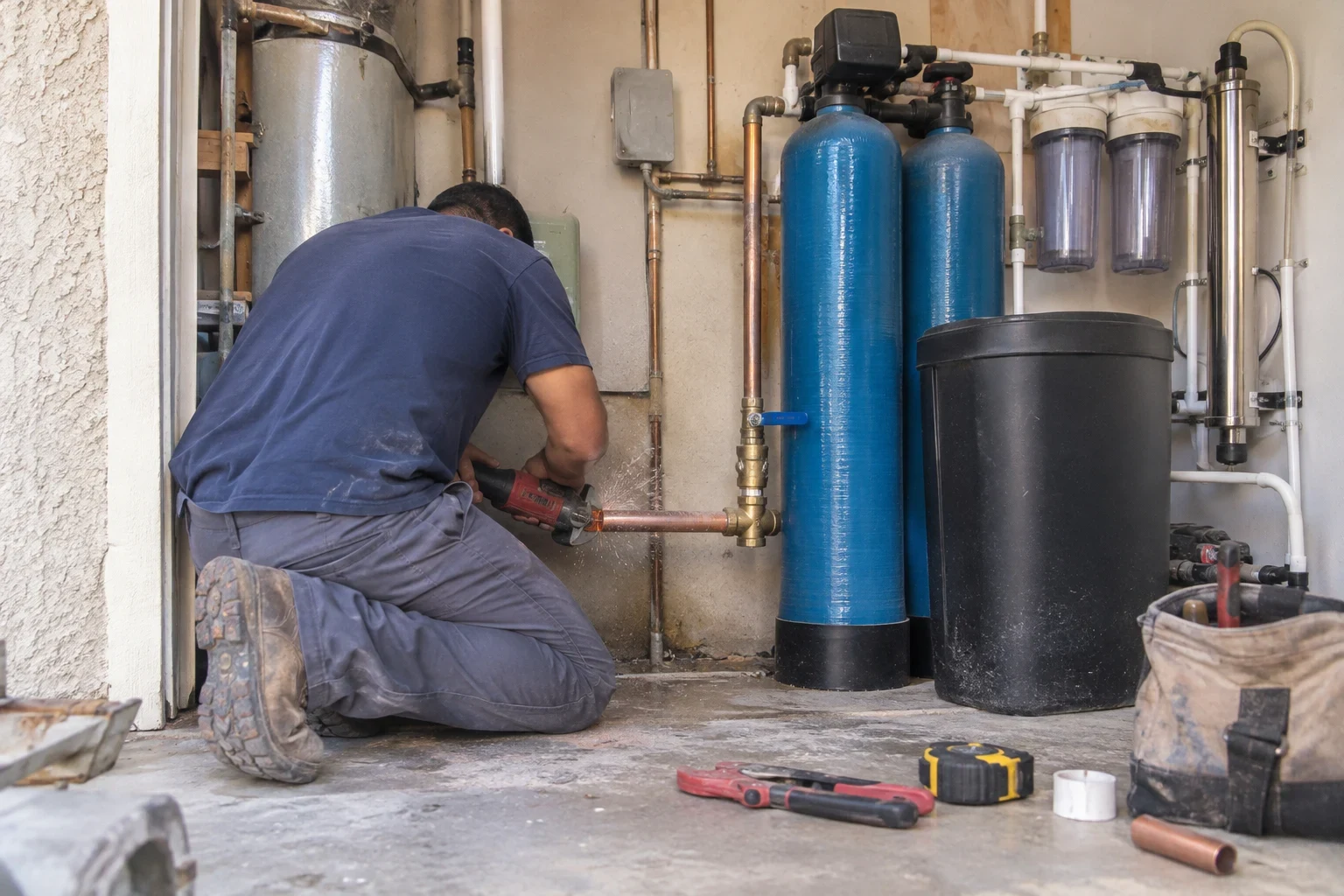
Once on site, we measure incoming pressure, because homes built on the peninsula's slopes can see very different readings. Before any cutting, we photograph the main line, the shutoff and any corrosion or old leak stains, so you keep a clear record of the plumbing as we found it.
- 3
Cut in and mount
We close the main, open the line close to where it enters the house, and mount the housings with unions and a bypass loop. Copper, PEX and galvanized pipe each get matching fittings, and dielectric unions go wherever two metals join.
- 4
Flush, check and clean up
Fresh carbon sheds fine black dust at first, so we run water through it until the flow comes out clear, then pressure-check each joint. Pipe cuttings and boxes leave with us. The last step is a short walkthrough at the unit: you turn the bypass handles yourself, and we tell you the change interval for each cartridge.
What moves the price
We cover the cost of installation, so the labor to cut in and mount the system is not on your bill. The total comes down to which equipment fits your household and what shape your existing pipes and valves are in. Every part is its own line on the quote, so nothing gets added after the fact.
- Home size and flow
- Each added bathroom raises the peak flow the system has to handle. Keeping enough contact time on the carbon at that flow takes a bigger vessel or housing.
- Cartridge or tank style
- Cartridge housings are cheaper at the start but need changing more often. A larger tank of media costs more up front and runs longer between services.
- Pipe material and condition
- Aging galvanized steel sometimes needs a short length replaced so the connection is made to sound pipe. A shutoff valve that has gone brittle may also need replacing before the line can be opened safely.
- Pressure regulation
- When incoming pressure is high, a regulator keeps it from stressing the filter housings and your fixtures. If your home already has a working one, no extra part is needed.
City water filtration questions
Is my city water unsafe to drink?
Utility water is treated and monitored to meet drinking water standards. This system is about taste, smell and sediment, not fixing unsafe water. We would rather tell you that plainly than sell you on fear. Your utility's annual water quality report lists what is in your supply.
Will a regular carbon filter handle chloramine?
Not well. Standard carbon removes free chlorine quickly but works on chloramine slowly, so it needs far more contact time. Catalytic carbon is made to break the chloramine bond faster, which is why we use it.
How often do I change the filters?
The sediment cartridge usually needs changing more often than the carbon, depending on how much grit your line carries. Carbon life depends on its size and your household's water use. We set the schedule based on the system you choose and show you how to do it with the bypass.
Will my homeowners insurance pay for this?
Usually not as a standalone upgrade. If you already have a leak or water damage claim open, the photos and notes we take of your main line and plumbing can help you show your adjuster what was there. We explain what we saw, but the adjuster decides coverage, and we will not tell you a claim will be paid.
Does this replace a drinking water system?
It improves the water at every tap, which is enough for many households. If you also want lower dissolved solids in the glass you drink, an under-sink unit from our Reverse Osmosis page pairs well with it.
Get city water that tastes like nothing
Give us a quick picture of your home on the phone: the bathroom count and the taste, smell or grit that bothers you. We size the system during that call and walk you through an itemized quote, and installation is on us.