ServicesDual Tank Water Filtration
Dual Tank Water Filtration in Rancho Palos Verdes
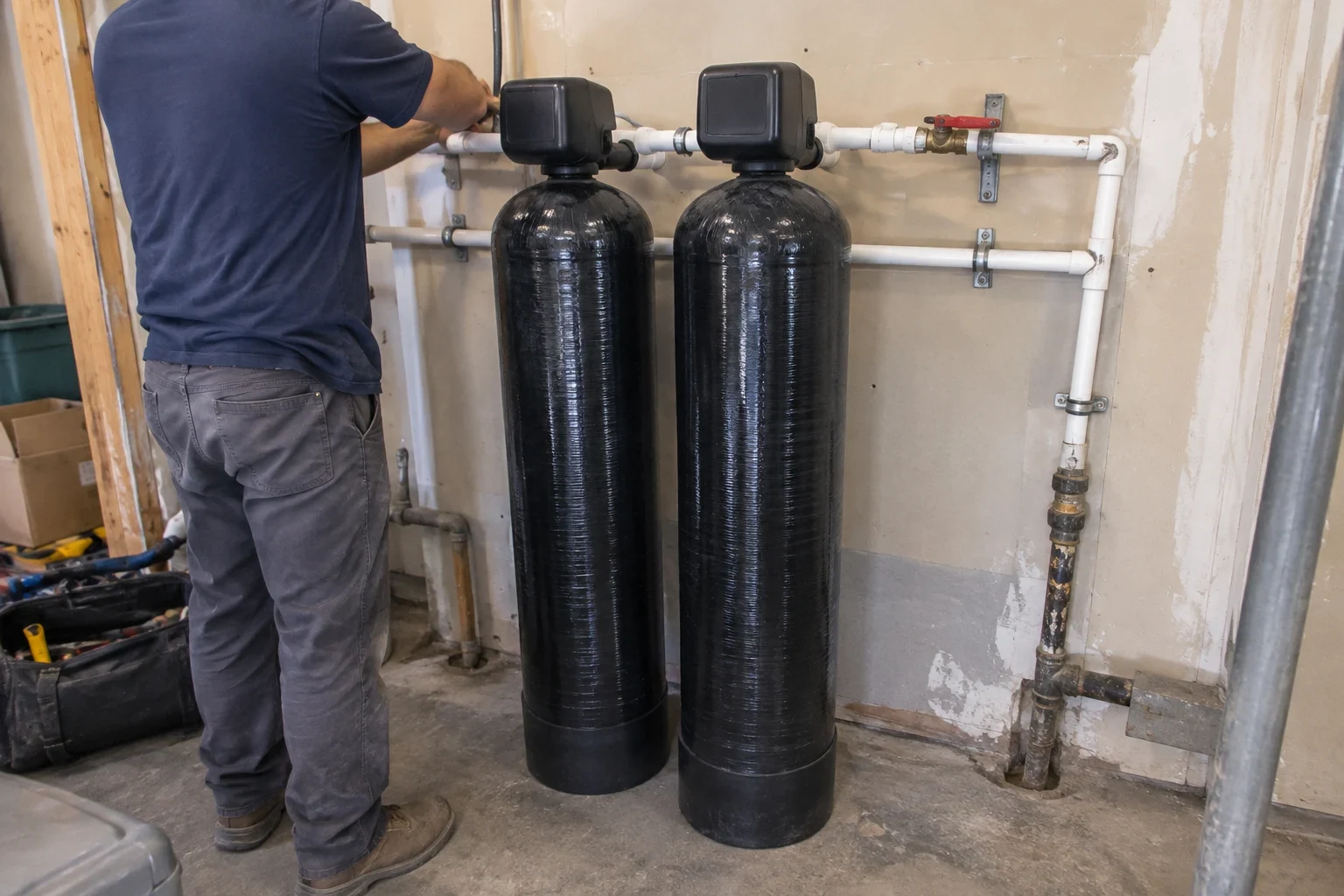
We install two-tank filtration systems at your main water line, splitting the work between a sediment and catalytic carbon bed and a second polishing bed. You get treated water at every faucet and shower, sized to how much water your home actually uses.
Why two tanks instead of one
Carbon reduces chlorine and chloramine through contact. The water needs enough time inside the media bed, called empty bed contact time, for the reaction to finish. A single tank sized for a busy home gets tall and heavy, and when it backwashes it has to lift the whole bed at once.
A dual tank system puts the media in two fiberglass-reinforced tanks plumbed in series. The first tank takes the sediment and does most of the chloramine reduction. The second polishes what is left. Each bed stays a size that backwashes cleanly, and together they give the water more contact time at full household flow.
It is the right call when a single cartridge housing clogs too often, when a single tank lets the taste return before its media should be spent, or when several bathrooms run at once. For drinking water only, an under-sink Reverse Osmosis unit may be a better fit, and we will say so on the call.
What a dual tank install includes
Two sized media tanks
Fiberglass-reinforced tanks with a gravel underbed and distributor tube, matched to your bathroom count and peak flow in gallons per minute. A tank that is too small costs you pressure and uses up its media early, so we settle sizing before anything else.
Catalytic carbon media
Ordinary granular carbon does well with free chlorine but works slowly on chloramine. The lead tank gets catalytic carbon, whose treated surface is better at breaking the bond between chlorine and ammonia.
Control valve and bypass loop
Each tank has its own control head that times its backwash. A bypass valve routes untreated water to the house, so the system can be serviced while your water stays on.
Drain line with an air gap
Backwash water leaves through a drain line that ends above an open air gap. That physical break keeps used rinse water from ever being pulled back toward the pipes that feed your home.
Startup flush and walkthrough
Carbon fines are rinsed to drain before any water reaches your fixtures, every joint is checked under line pressure, and we point out the bypass and shutoff valves so you know where they are.
Signs a dual tank system makes sense for your home
- A pool-like or faintly ammonia smell
- That odor in the shower or a glass of water is usually the disinfectant. Imported water serving the South Bay is commonly treated with chloramine, which needs more carbon contact than plain chlorine.
- Pressure drops when two showers run
- If your current filter is a single cartridge or a small tank, high flow pushes water through too fast. Pressure falls and treatment suffers at the same time.
- Taste returns long before it should
- A single tank that seems spent within months is often undersized for the household, so the media is working past its rated flow.
- Grit in faucet aerators
- Fine sediment collecting in aerator screens means the lead tank should include a sediment stage before the carbon does its work.
- An aging system that weeps or leaks
- A cracked valve head or split fitting can wet a garage floor or wall. If that happened, we photograph the failed part and note what we found so you have a clear record to share with your insurer.
How the job runs
- 1
A phone conversation first
We ask about bathrooms, people in the home, pipe material and where your main line comes in. That is enough to recommend tank sizes and media before anyone visits.
- 2
Site check
We confirm a level spot near the main line, a drain for backwash and an outlet for the control heads. Many installs here go in the garage beside the main shutoff.
- 3
Install day
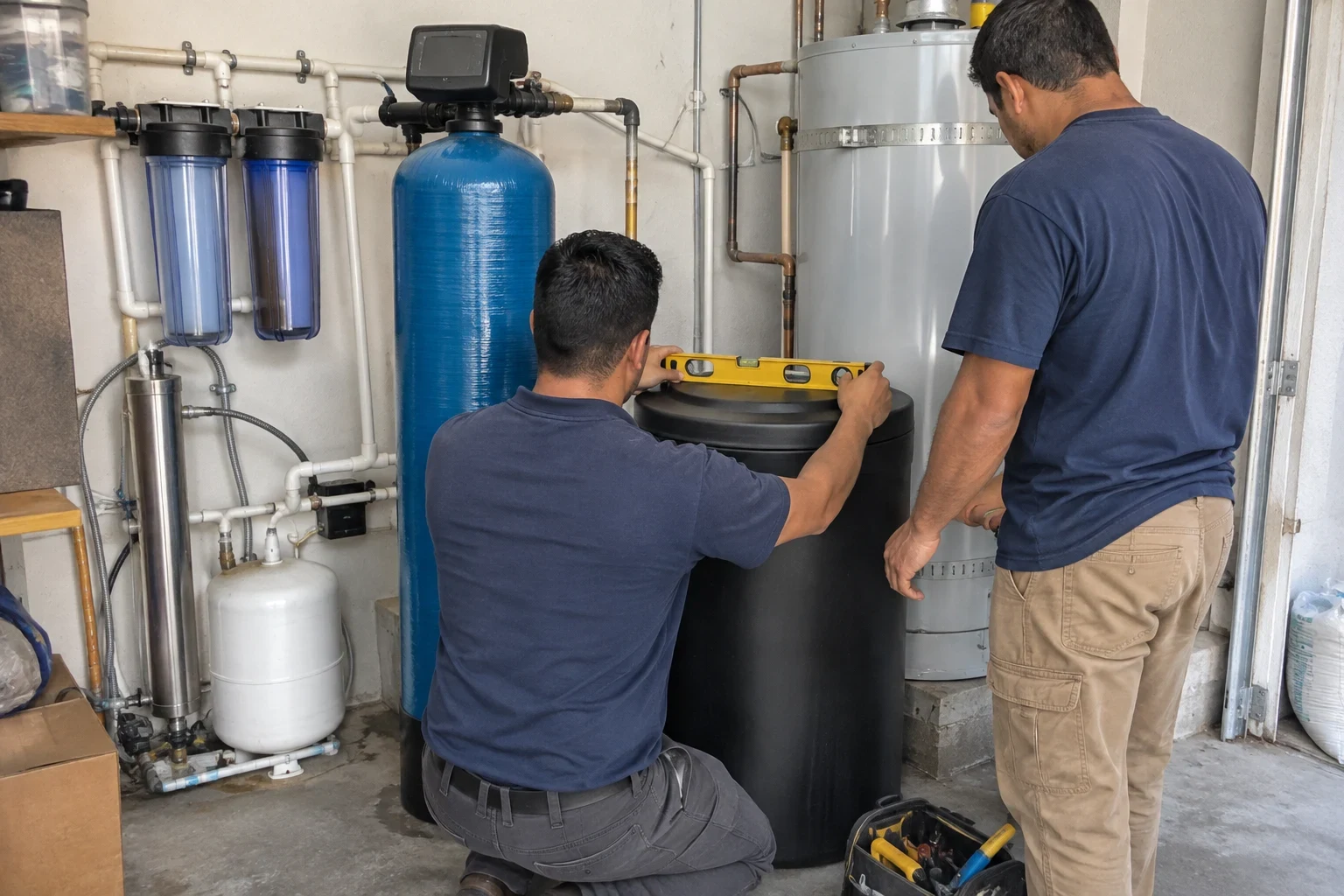
We shut the water, cut in the bypass loop on copper or PEX, set both tanks, load media and connect the drain with an air gap. Expect your water off for part of the visit, and we tell you when before we start.
- 4
Startup and cleanup
Tanks fill slowly to purge air, carbon fines flush to drain, and we program the backwash times for overnight. Pipe offcuts and packaging leave with us.
What sets the price
Installation is on us, so the quote you hear is mostly equipment and media. What that adds up to depends on your home, which is why we work out sizing during the call before anything else. You get your quote by phone, with each component named.
- Tank and media volume
- A house with four bathrooms and several people showering in the morning pulls far more gallons per minute than a two-bath home. That peak demand sets how big each tank must be and how many pounds of media go inside.
- Media choice
- Catalytic carbon costs more than standard granular carbon, and an added sediment layer adds material.
- Pipe size and material
- A one-inch main needs larger valve heads and fittings than a three-quarter-inch line.
- Location and access
- A garage wall next to the main line is simplest. Running new pipe to reach a drain or outlet adds parts and time.
Dual tank filtration questions
- Does a dual tank system remove chloramine?
- It reduces it, which is what most people notice as better taste and less odor. Catalytic carbon in the lead tank does the heavy work, and the second tank catches what slips past. No carbon system removes everything, and we will not claim otherwise.
- Does it waste water?
- Only during backwash, when each tank rinses itself to the drain on a schedule, usually a few times a month overnight. Between backwashes, all the water goes to your home.
- How is this different from reverse osmosis?
- A dual tank system treats every tap in the house for taste, odor and sediment. Reverse Osmosis is an under-sink unit that strips much more out of the water, but only for drinking and cooking. Some homes pair the two.
- Is installation really covered?
- Yes. We cover the cost of the install, so you are paying for the equipment and media in your quote.
- How often does the media need replacing?
- It depends on tank size and how much water your home uses. A correctly sized catalytic carbon bed lasts years rather than months. When the smell starts returning, that is the usual sign.
- My old filter leaked. Can you help with the insurance side?
- We can document what we find: photos of the failed part, where it failed and the likely cause. We are not the adjuster and cannot tell you what your policy covers, but a clear record helps the conversation with your insurer.
Find out what size system your home needs
Tell us your bathrooms, pipe size and where the main line enters. We will recommend tank sizes and media and give you a clear quote over the phone.